

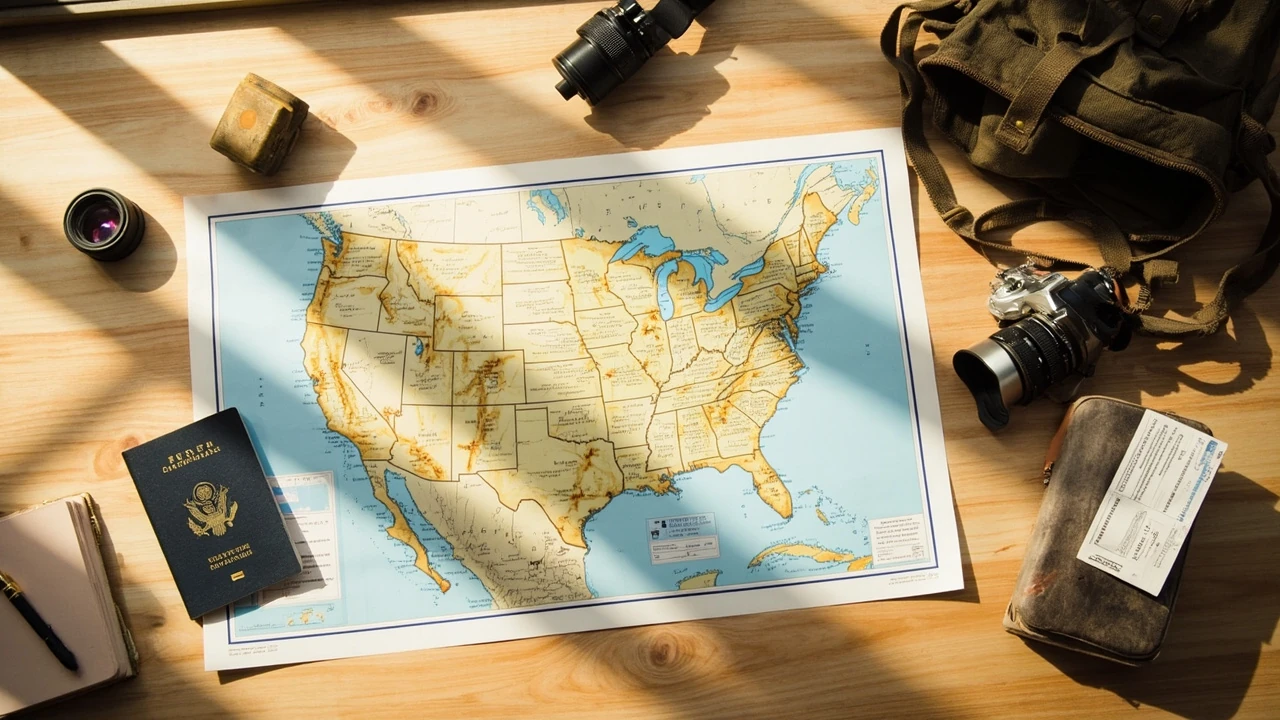
USA guide: choose the kind of trip that suits you
A first visit to the United States becomes easier when it has one clear shape. Two travelers with three weeks in the country may build a route through major cities, while a family with young children may prefer a smaller base with day trips and a national park. The right plan starts with the experiences you value, not with a list of every famous place you think you should see.
This usa guide focuses on practical decisions: where to go, how to move between places, where to sleep, which costs deserve advance attention, and how to avoid a schedule that leaves you exhausted. It is designed for first-time visitors who need a workable framework rather than an endless list of recommendations.
Before booking anything, write down the trip in one sentence. “We want to experience cities, food, and one dramatic landscape” is more useful than “We want to see everything.” Include your approximate travel dates, the number of nights available, your budget, and who is coming along. These four details will quickly eliminate routes that cannot work well.
- Time: Decide how many nights you can use, then reserve no more than most of them for destinations.
- Interests: Rank two or three priorities, such as food, architecture, outdoor recreation, music, history, shopping, or family activities.
- Travel style: Decide whether you prefer a moving itinerary, a city stay, or a mix of both.
- Comfort: Set a limit for daily walking, driving time, flight frequency, and the amount of luggage you want to manage.
- Flexibility: Identify one or two days that can remain unplanned for delays, reservations, or a place you want more time to explore.
Most successful routes use one of four basic structures. A city itinerary works well for architecture, museums, restaurants, and short outings. A regional road trip emphasizes scenery and small towns but requires attention to driving distances. A national park trip focuses on hiking, wildlife, and open landscapes. A mixed route combines one or two urban stops with a natural destination, but it should leave enough time to slow down in both places.
| Trip style | Best fit | Main advantage | Main planning concern |
|---|---|---|---|
| City itinerary | Short stays, museum fans, first-time visitors | Easy access to restaurants, neighborhoods, and cultural events | Hotel costs and advance reservations in popular areas |
| Regional road trip | Travelers who want scenery and flexible stops | Freedom to change the route | Long driving days and one-way logistics |
| National park trip | Hikers, wildlife watchers, families seeking outdoor experiences | A clear reason to travel beyond the cities | Permits, seasonal access, crowding, and limited services |
| Mixed city-and-nature route | Visitors with enough time to avoid rushing | Combines urban food and culture with outdoor recreation | Balancing transit time and time spent at each stop |
Choose the lightest itinerary that still fulfills the main goal. You do not need to cross the country to have a memorable American trip. A well-planned week in one city and its surroundings often provides more satisfaction than a rushed route built around distant highlights.
Match your route to the right region
The United States contains regions with distinct climates, landscapes, travel rhythms, and cultural identities. Treat distance seriously. Two cities that look close on a small map can be separated by several hours of road or rail travel, especially when a route crosses mountain ranges or sparse areas.
New England offers compact historic towns, coastal scenery, and fall foliage, but small lodging inventories can fill early during peak leaf season. The Southwest is defined by major cities, desert scenery, and national parks, with long distances between some destinations. The Pacific Coast combines cities, mountains, forests, and coastline, yet traffic and accommodation prices can be high.
The South includes distinct food traditions, music cities, historic districts, coastal areas, and access to varied outdoor landscapes. The Midwest and Great Plains may be less familiar to overseas visitors, but they offer cities, road routes, state parks, and important food and cultural traditions without the intensity of the busiest coastal destinations.
| Region | What visitors often come for | Route-building advice | Time-sensitive issue to verify |
|---|---|---|---|
| Northeast | Major cities, history, coastlines, autumn scenery | Cluster nearby cities before adding a rural stop | Foliage season, hotel demand, and seasonal events |
| Southeast | Food, music, historic cities, beaches, theme parks | Pair one city with a nearby coastal or nature area | Hurricane season and attraction schedules |
| Midwest and Great Plains | Road trips, food, cities, lakes, prairie scenery | Use longer stays and avoid unnecessary backtracking | Severe weather and seasonal road conditions |
| Southwest | Deserts, national parks, cities, Indigenous cultural sites | Check the heat and elevation at each stop | Park access, timed entry, and summer temperatures |
| Pacific Coast | City neighborhoods, mountains, redwoods, coastline | Allow travel time between urban and natural areas | Wildfire conditions, road closures, and booking demand |
Weather should influence the sequence rather than merely the packing list. A winter visit to the Northeast calls for a different route from a summer visit to the Southwest. Mountain destinations also require more adjustment when travelers are not used to high elevation or rapidly changing conditions.
A useful regional test is to ask whether each transfer feels worthwhile. If a flight or four-hour drive adds another worthwhile day, keep it. If the connection only creates the appearance of a larger itinerary, remove it. Fewer bases can mean better food, more sleep, and a greater chance of seeing the place you came to see.
Move between cities without turning transit into the trip
Transportation is one of the largest practical differences between traveling in the United States and visiting a smaller, compact country. Distances are often measured in states rather than blocks. Before adding a city, compare the door-to-door travel time with the time you expect to spend there.
A flight may cover a long distance quickly, but it adds airport time, security screening, baggage collection, and transfers between the airport and local transportation. A train can offer a more comfortable connection between some city pairs. A rental car provides the greatest freedom, but it adds driving, parking, fuel, tolls, insurance, and one-way return considerations.
| Option | Best for | What to compare | Common mistake |
|---|---|---|---|
| Air | Long distances and limited travel time | Total journey time, checked bags, airport transfers, and schedule changes | Comparing flight duration alone |
| Intercity rail | City pairs with practical rail service | Station location, departure time, and onward transportation | Assuming every route has frequent trains |
| Long-distance bus | Lower-cost movement on established routes | Journey length, departure point, and comfort | Overlooking the hours spent on and off the bus |
| Rental car | Regional exploration and flexible schedules | Daily rate, insurance, fuel, tolls, parking, and mileage terms | Booking before confirming where the vehicle can be returned |
| Public transit and rideshare | Local travel within a city | Service area, late-night coverage, and accessibility needs | Expecting it to cover every attraction |
For a first visit, a simple rule works well: fly for long jumps, use rail or a car for suitable regional routes, and rely on local transit for daily movement. This avoids the worst of both extremes—the wasted time of a flight for a short journey and the fatigue of driving across the country.
- Allow a realistic buffer between an arriving flight and a nonrefundable activity.
- Check whether a hotel provides a shuttle or detailed instructions from the nearest station or airport.
- Keep digital and printed copies of essential reservations in case mobile service is unavailable.
- Research parking rules before driving into a dense downtown neighborhood.
- Do not schedule a remote trail, long transfer, or late flight after a full day of sightseeing.
- Check the rules for child seats, driver age requirements, tolls, and one-way rentals before booking a car.
Travel days should consume less of your itinerary than local days. If your trip includes several flights or extended drives, try to place a lighter activity after each transfer. A half-day museum, a neighborhood meal, or an early evening walk gives you time to recover without losing the trip entirely.
Choose a base that saves daily time
Where you sleep affects your experience more than many travelers expect. A convenient neighborhood can reduce transit time, make meals easier, and prevent the need to carry luggage between hotels. The cheapest room may require long commutes, while the most expensive downtown room may sit in a noisy area or make driving difficult.
For a first visit to a major city, stay near the activity you want to emphasize rather than in the absolute center by default. If your priority is museums, choose a base with simple access to them. If food is the focus, stay near a mix of restaurants without planning to return to the hotel between every meal. If you are visiting with children, prioritize space, a practical kitchen or laundry option, and a quieter area.
National park lodging deserves a different approach. Lodging inside or near a park may be limited, and popular areas can fill far in advance. Staying outside the immediate area can work if you accept a longer daily commute and check the closing time of park roads, trails, visitor facilities, and nearby services.
| Base type | Suits travelers who | Check before booking | Possible trade-off |
|---|---|---|---|
| Central city hotel | Want restaurants and attractions within easy reach | Noise, room size, parking, and seasonal demand | Higher rates and little space for a long stay |
| Residential neighborhood | Prefer local streets and calmer evenings | Transit access, walkability, and later return journeys | May require more transit or rideshare use |
| Airport hotel | Arrive late or depart early | Transfer convenience and cancellation terms | Less time spent in the city itself |
| Park or small-town lodging | Prioritize trails, scenery, and quiet | Availability, seasonal services, and daily commute | Fewer dining or entertainment choices |
| Long-stay rental | Are staying longer or traveling as a group | Cleaning rules, local fees, and neighborhood fit | May not suit a brief visit |
Read recent reviews for practical details rather than marketing language. Look for comments about stairs, noise, air conditioning, walking to transit, bathroom ventilation, kitchen equipment, and check-in after normal desk hours. These details often matter more than a decorative view.
Ask three questions before confirming any stay:
- What neighborhood will visitors actually be walking through after dinner?
- How long does the journey to the main planned activity take?
- Does the room size and storage work for the length of the stay?
A trip becomes less tiring when the location matches its pace. A compact urban stay with a few planned outings often works better than a fast-moving hotel itinerary where you spend much of each day packing, transferring, and waiting.
Plan national parks around access and conditions
Children also benefit from learning about the country before arrival. The For additional context, Which Way USA book club is a home-based geography option for children age seven and older, using illustrated maps, state activities, and puzzles to introduce capitals, flags, and regional facts before a trip. It can help a child recognize names and places, but it should complement rather than replace real observation and local experiences.
National parks are among the strongest reasons to visit the United States, but they are not simply scenic parking lots. Trails may close seasonally, roads may have restrictions, shuttle systems may be reservation-based, and popular viewpoints often reach capacity early in the day.
For an unfamiliar landscape, begin with one or two accessible areas rather than attempting to cover the entire park. A scenic overlook, short interpretive trail, and wildlife-viewing period can create a satisfying park day. More ambitious hikes should match your experience and the actual trail conditions.
- Start with the ranger or visitor-center information: Learn about closures, weather, trail conditions, and current alerts.
- Check the official park information before travel: Confirm operating periods, reservation requirements, road access, and available facilities.
- Carry appropriate essentials: Footwear, water, weather layers, sun protection, food, and a charged phone belong in most day packs.
- Turn around safely: Heat, storms, wildlife, fatigue, and unfamiliar terrain can make a planned route unwise.
- Protect natural areas: Follow rules about food, wildlife distance, fires, and objects left behind.
The timing of a visit can change both access and experience. Winter may offer excellent snow conditions but limited services. Summer may bring longer daylight and busy roads. Shoulder seasons can reduce crowds, but weather and temporary closures are more likely to affect plans. Always verify current conditions rather than relying on a general seasonal impression.
For travelers building a broader national itinerary, compare the Grand Tetons with the kind of access and activities that suit your group. The practical overview in The Grand Tetons: What to Know Before Your First Trip is useful when you want to think through trail level, mountain weather, and the amount of time needed beyond the main viewpoints.
| Park-day question | Why the answer matters | Best time to check |
|---|---|---|
| Are roads or trails open? | Your planned route may not be available on the travel date | Before booking nearby lodging and again shortly before arrival |
| Is a timed entry or parking reservation required? | Arrival may depend on a specific time or release date | When transportation is booked |
| What is the expected weather? | Heat, wind, snow, or storms can change the activity | During route planning and each morning |
| Which facilities are operating? | Food, fuel, lodging, showers, or visitor services may be limited | Before building the day around them |
| How strenuous is the trail? | Distance and elevation may not match your assumptions | Before the first long walk of the trip |
Leave a buffer for a weather-related alternative. A drive to a lower viewpoint, wildlife watching, or a short interpretive walk can preserve the day if a longer trail becomes unsafe or uncomfortable.
Control daily costs without making every choice around price
A useful budget separates fixed costs from expenses that change with your choices. Flights and long-distance transportation are often substantial commitments, while food, local transit, attractions, and lodging respond more directly to your daily decisions. A realistic budget needs both categories.
| Expense | What can influence the total | Practical control |
|---|---|---|
| Long-distance transport | Season, route, booking date, baggage, and connection choices | Compare the total door-to-door journey and flexible options |
| Lodging | City, season, neighborhood, length of stay, and room type | Stay long enough to reduce moving costs while checking the full neighborhood |
| Food | Meals at restaurants, groceries, and the number of travelers | Mix everyday meals with special dining experiences |
| Local transportation | Airport transfers, transit passes, rideshares, parking, and fuel | Estimate one full day in each city before choosing a car |
| Activities | Guided tours, museums, rentals, permits, and special events | Choose a few priorities rather than trying to buy access to everything |
| Unexpected costs | Baggage fees, medication, communication, tips, and repairs | Keep a separate contingency amount outside the daily budget |
Daily spending depends on how you travel. Public transit and simple meals can reduce costs, but they may also consume more time. A rental car may cost more while giving you access to places outside transit corridors. The best budget is not necessarily the lowest total; it is the plan that matches your priorities without causing constant second-guessing.
Use a travel-cost worksheet with five columns:
- Expected cost before the trip
- Amount actually committed through bookings
- Estimated daily spending
- Emergency reserve
- Currency or exchange-rate assumptions, if relevant
For travelers budgeting in another currency, check whether cards or cash will work in each area and understand any foreign transaction fees. Avoid carrying more cash than necessary, especially in busy tourist areas. Keep an emergency contact method and enough information to replace a lost card or phone.
Cut costs by changing the itinerary rather than chasing questionable bargains. A second night in the same city may be more valuable than a rushed day trip with expensive transport. A grocery-store breakfast or a mix of casual and special meals can preserve funds for the experiences that matter most to your group.
Make the trip work for children and multigenerational groups
Family travel changes the meaning of a good itinerary. Adults may value a landmark, but children may care most about an animal, a train, a playground, or the chance to choose what happens next. Multigenerational groups face another challenge: pace, mobility, and preferences can differ widely within the same party.
Build the day around one anchor and one flexible activity. For example, schedule a short museum in the morning and leave the afternoon for a neighborhood walk, playground, swimming option, or picnic. This structure keeps the schedule predictable without turning every hour into another reservation.
- Keep one adult flexible: One person can handle a snack stop, restroom, or minor issue without disrupting the group.
- Pack familiar items: A favorite snack, compact activity, and familiar bedding can help during transit delays.
- Choose realistic activities: Museums with hands-on exhibits, animal-focused attractions, and scenic transport can suit children better than a schedule of adult sightseeing.
- Plan for downtime: Do not schedule every daylight hour around a fixed activity.
- Ask elderly relatives about needs: Walking tolerance, stairs, seating, bathroom access, and medical needs deserve specific consideration.
| Group need | Easy-to-miss detail | Better planning response |
|---|---|---|
| Young children | Transitions and waiting are tiring | Use short activity blocks and familiar snacks |
| Teenagers | They may value independence over another attraction | Offer a choice within the day’s structure |
| Older adults | Long walks and stairs may reduce enjoyment | Confirm access and include regular seating |
| Multigenerational parties | Different budgets and interests can conflict | Agree on one shared anchor and optional side activities |
| Large families | Room layouts and private transportation can be restrictive | Check usable space, parking, and meal logistics |
Ask children what they want to remember rather than asking them to choose every detail. “Would you rather see a train ride or an aquarium?” is manageable. A list of ten equally important attractions is not. Giving them a meaningful decision helps them feel involved while keeping the adults in charge of logistics.
Use a 30-day checklist to catch problems early
A trip can fail because of small details: an expired document, an overlooked transit connection, or a reservation that was never confirmed. Use a staged checklist so important decisions happen at useful times rather than all at once.
Four to six weeks before travel:
- Confirm passport validity, entry requirements, and any conditions that apply to your specific nationality.
- Set the route and decide which nights are fixed.
- Compare transport and lodging, including total journey time and cancellation terms.
- Check whether major parks, attractions, events, or transportation services require reservations.
- Review travel insurance needs and the coverage provided by existing arrangements.
Two to three weeks before travel:
- Make the bookings that are important or supply constrained.
- Confirm connections between trains, flights, shuttles, and hotel check-in times.
- Ask the property about room setup, accessibility, parking, and luggage storage.
- Download offline maps and preserve copies of confirmations.
- Create a shared itinerary with only the essential details and emergency contacts.
The final week:
- Recheck weather, road conditions, park alerts, and attraction operating information.
- Confirm airport or station procedures and the route from the accommodation to the first destination.
- Pack according to the weather and activities, then weigh the bags.
- Check that medication, travel documents, chargers, and identification are accessible.
- Prepare a lighter version of the plan for the first day in case a flight or drive runs late.
On the ground, protect your energy by using a simple daily structure: one main activity, one supporting activity, meals with at least one relaxed option, and an unplanned window. This usa guide approach makes the itinerary resilient. You can still see the highlights while retaining enough flexibility to respond to weather, crowds, tired feet, or an unexpectedly good local recommendation.
Build the checklist into one copy that everyone traveling can access. Include the emergency number appropriate to the location, the lodging address, key reservation details, and a shared payment plan for group expenses. Do not store every sensitive document openly in a group chat; use a secure location for complete copies.
Frequently asked questions
How long should a first trip to the United States last?
At least a week allows a meaningful visit to one region, while two to three weeks support several stops or a deeper stay in a smaller number of places. The right duration depends more on whether you want to experience a few areas well or cross the country quickly. Add transit days to the number of nights you hope to spend sightseeing.
Should a first-time visitor drive or use trains and planes?
Use a combination that fits the route. Flights are efficient for long distances, trains can work well between connected cities, and a rental car is useful for regional exploration. Compare door-to-door time, baggage needs, parking, and local mobility before choosing. A route made entirely of flights can be tiring, while continuous long-distance driving can consume much of the trip.
What is the best way to choose a city?
Choose it for one or two activities that genuinely interest you, then verify the practical details. Consider neighborhood, travel time, seasonality, local events, and whether you need a car. If two cities offer similar attractions, adding the one with easier transportation may be more rewarding than adding another famous name.
Do I need to reserve national park entry in advance?
Requirements vary by park and can change, so check the official information for the specific locations and dates on your route. Some parks use timed entry or reservation systems during busy periods, while others do not. Park roads, trails, campgrounds, and visitor facilities can also have seasonal limits that are separate from entry rules.
How much money should I set aside for a first trip?
Build a figure from long-distance transportation, lodging, food, local travel, chosen activities, and a contingency reserve. Prices depend heavily on the city, season, length of stay, and travel style. Instead of relying on a single national average, estimate one realistic day in each destination and add the bookings you have already committed to make.
Can a USA guide cover the whole country in two weeks?
Not in depth. Two weeks can sample a well-connected region or pair major cities with a national park, but long transfers will consume valuable time. This usa guide recommends reducing the number of stops rather than turning every day into a journey. Choose a clear geographic theme and leave space for weather, delays, and spontaneous discoveries.
What should I pack for national parks?
Start with suitable footwear, water, food, weather layers, sun protection, a charged phone, and a small first-aid supply. Add bear-resistant storage where local guidance requires it, and check fire restrictions before carrying matches or a campfire. Avoid bringing more equipment than you will actually use.
Is the United States better for families with older children?
It can be, especially when the route combines a major attraction with outdoor space, transport experiences, or activities that let children make choices. Older children may also value the variety of landscapes and cultural differences between regions. Build in flexibility, limit transfers, and avoid relying on entertainment at every moment.
How should I handle money and safety during the trip?
Use familiar payment methods where possible, keep an emergency reserve, and protect access to your devices and documents. Stay alert in unfamiliar areas, follow local laws, and follow park guidance about wildlife and natural areas. Research the normal risks for the places you visit rather than relying on broad stereotypes about safety.
What is the most common mistake first-time visitors make?
The most common mistake is trying to collect too many destinations. A shorter route creates more time for meals, neighborhood walks, reservations that matter, and recovery after long transfers. Choose the route that gives you the strongest reason to travel, then protect that choice with a realistic schedule and a flexible day.
Leave a Reply